
Introduction
Choosing kitchen appliances for a small kitchen is not about buying the smallest product available. It is about choosing appliances that are useful, easy to place, and worth keeping within reach.
Small kitchens often have limited counter space and storage, so every appliance needs to earn its place. A toaster, kettle, blender, or hand mixer can be helpful, but only if it supports your real daily routine. If an appliance is used often, saves time, and does not make the kitchen feel crowded, it can be a smart addition to your home.
This guide will help you choose small kitchen appliances based on your space, routine, storage needs and the way you actually cook or prepare food at home.
Why Small Kitchens Need Smarter Appliance Choices
In a small kitchen, too many appliances can quickly create clutter. A product may look useful online, but if it takes up too much counter space or is difficult to store, it may become more frustrating than helpful.
That is why small kitchen appliances should be selected with a clear purpose. Instead of buying every new countertop appliance, start with the products that solve repeated tasks. For example, if you make breakfast every morning, a toaster can be useful. If you drink tea or coffee often, a kettle may become part of your daily routine. If you make smoothies, sauces, or shakes, a blender can help with quick prep.
The goal is to build a kitchen setup that feels simple and practical. Good kitchen appliances for a small kitchen should help you do more with less space. They should support cooking, drinks, breakfast, baking prep, or light food preparation without taking over the counter.
For many homes, a small set of useful countertop appliances is better than a large collection of products that rarely get used.
Start with Appliances You Use Every Day
When space is limited, the best way to choose appliances is to look at your daily routine. Think about what you do most often in the kitchen and choose products that support those habits.
For Breakfast and Toasting
If your mornings usually include toast, bagels, waffles, or quick snacks, a toaster is one of the most practical small kitchen appliances to consider. It does one job clearly and can save time during busy mornings.
A product like the Retro Toaster can fit naturally into a small kitchen setup because it supports a repeated routine without needing a large cooking area. If you use it regularly, it makes sense to keep it on the counter.
When choosing a toaster for a small kitchen, look for a design that feels easy to place, easy to clean, and useful enough for daily breakfast prep.
For Tea, Coffee, and Hot Water
A kettle is useful if you make tea, coffee, oatmeal, instant meals, or hot water regularly. Instead of using a pot every time, a kettle can make the process faster and more convenient.
The Retro Kettle is a good example of a countertop appliance that supports daily use without needing much prep. It can stay accessible for morning drinks, evening tea, or quick hot water needs throughout the day.
For small kitchens, a kettle is often worth considering because it serves one of the most common home routines and does not require complex storage.
For Smoothies and Light Prep
A blender is helpful if you prepare smoothies, shakes, sauces, dips, or quick blended recipes. It can support healthier drink routines and light meal preparation without needing several different tools.
The Retro Blender can be linked naturally in this section because it supports everyday blending needs while staying within the small kitchen appliance category.
Before buying a blender, think about how often you will use it. If smoothies or blended drinks are part of your routine, it can be a valuable appliance. If you only blend occasionally, check whether you have enough storage space before keeping it on the counter.
For Baking Without Bulky Equipment
If you enjoy baking but do not have space for large appliances, a hand mixer can be a smart choice. It is useful for cake batter, pancake mix, whipped cream, frosting, eggs, and light dough preparation.
The Retro Electric Hand Mixer works well as a compact option for people who want mixing support without keeping a larger appliance in the kitchen.
For small kitchens, a hand mixer is practical because it can be stored more easily than heavier mixing equipment while still supporting regular baking and food prep.
What to Check Before Buying Appliances for a Small Kitchen
When you buy kitchen appliances for a small kitchen, the product should fit your space as well as your routine. A compact appliance is not always the best choice if it is difficult to clean, awkward to store, or used only once in a while.
Before buying, check these points carefully:
1. Counter Space
If an appliance will stay on the counter, make sure it does not block your prep area. A toaster or kettle can be easy to keep out if you use it every day. A blender or hand mixer may be better stored away if you use it less often.
2. Storage Space
Small kitchens need smart storage. Before buying a new appliance, think about where it will go when it is not in use. A hand mixer is often easier to store than larger mixing equipment, which makes it practical for compact kitchens.
3. Cleaning Effort
An appliance that is difficult to clean may not get used often. Look for products that are simple to wipe down, empty, or rinse after use. This matters especially for blenders, toasters, and mixers because they are used with food particles, liquids, or batter.
4. Frequency of Use
The best small kitchen appliances are the ones you use regularly. If you drink tea or coffee every day, a kettle may deserve counter space. If you make toast often, a toaster can become part of your morning setup.
5. How It Works with Other Kitchenware
Think about the full routine, not only the appliance. For example, a blender may help you prepare smoothies, but an Acacia Wood Serving Bowl can help with fruits, snacks, or breakfast sides. A kettle can support quick meals, but a compact cookware piece like a Cast Aluminum Sauce Pot can help with oatmeal, soups, or simple stovetop cooking.
This kind of planning helps you build a small kitchen that works as a complete setup.
Best Appliance Setup for a Small Kitchen
You do not need every appliance to build a useful small kitchen. A simple setup with a few daily-use products can support most home routines.
1. Toaster for Quick Breakfasts
A toaster is useful if your mornings include toast, bagels, waffles, or quick snacks. It saves time and does not require a full cooking setup. For small kitchens, a toaster works best when it is used often enough to stay on the counter.
2. Kettle for Hot Drinks and Quick Water
A kettle is one of the most practical countertop appliances for tea, coffee, oatmeal, instant meals, and hot water. If hot drinks are part of your daily routine, it can be one of the first appliances to consider.
3. Blender for Smoothies and Light Prep
A blender is useful for smoothies, shakes, dips, sauces, and quick blended recipes. It can support both breakfast and light food preparation, making it helpful for people who want more use from one appliance.
4. Hand Mixer for Baking Prep
A hand mixer is useful if you enjoy baking but do not have space for larger mixing equipment. It can help with batter, whipped cream, frosting, eggs, and pancake mix while staying easier to store.
A small kitchen setup should be built around frequency of use. Start with the appliance you will use most, then add other products only when they solve a regular need.
How Appliances Work with Other Kitchenware in a Small Space
A small kitchen works best when every product has a clear role. Appliances help with quick tasks, cookware supports stovetop meals, and tabletop products help with serving and dining.
For example, a toaster and kettle can support a simple breakfast routine. A blender can help with smoothies or sauces. A Ceramic Fry Pan or Cast Aluminum Sauce Pot can support stovetop cooking when you need eggs, oatmeal, sauces, or quick meals. An Acacia Wood Cutting Board can be used for slicing fruit, bread, or vegetables and can also work as a simple serving board when space is limited.
This is why choosing appliances should not happen separately from the rest of your kitchenware. If you are building a compact kitchen, think in small groups:
A toaster, kettle, and cutting board for breakfast
A blender, serving bowl, and saucepan for light prep
A hand mixer, mixing tools, and cookware for baking support
A frying pan or sauce pot for quick stovetop meals
The right mix of appliances, cookware, and tabletop essentials can help a small kitchen feel more organized and useful without adding unnecessary clutter.
How to Build a Compact Kitchen Setup Without Clutter
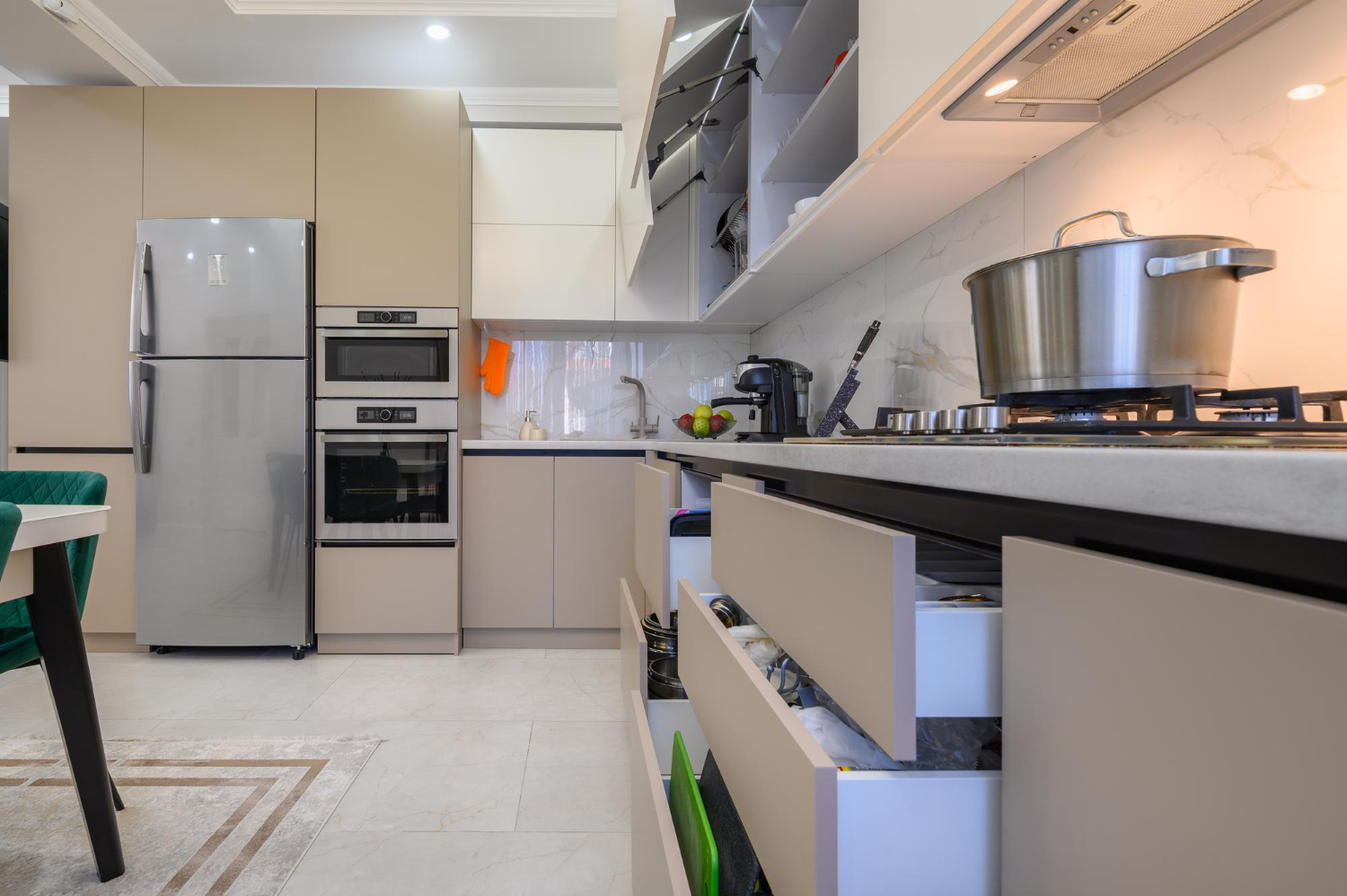
A small kitchen should not feel overloaded with products. The goal is to choose appliances, cookware, and tabletop essentials that work together and support your daily routine.
Start with the appliance you use most often. If your mornings are busy, a Retro Toaster and Retro Kettle can support breakfast and hot drinks. If you prepare smoothies or sauces, a Retro Blender may be more useful. If you bake occasionally, a Retro Electric Hand Mixer can help without taking up the space of a larger mixer.
Then, add a few supporting kitchenware pieces. A Cast Aluminum Sauce Pot can help with oatmeal, soups, sauces, and quick stovetop meals. An Acacia Wood Cutting Board can support prep work and also double as a simple serving board. This keeps your kitchen setup useful without adding too many separate products.
For a compact kitchen, think in small routines:
Breakfast: toaster, kettle, cutting board
Quick meals: sauce pot, fry pan, blender
Baking prep: hand mixer, mixing tools, serving bowl
Serving: cutting board, condiment server, tabletop bowl
This approach helps you choose products with purpose instead of filling the kitchen with items that rarely get used.
When Should You Upgrade Your Small Kitchen Appliances?
You do not always need to replace an appliance just because a new version is available. In a small kitchen, upgrades should be based on function, space, and daily use.
Consider upgrading when:
Your current appliance is too bulky for your counter
You avoid using it because it is hard to clean
It no longer supports your daily routine
You need a product that combines style with regular use
You are setting up a new kitchen and want essentials that work together
For example, if your old toaster takes up too much room but you still use it every morning, replacing it with a better counter-friendly option can make sense. If you make smoothies often but avoid your blender because it is difficult to clean or store, that may also be a sign to upgrade.
A small kitchen works best when every product has a reason to be there. Appliances should make your routine easier, not create more work.
For a deeper buying checklist, you can also read Things to Consider Before Buying Kitchen Appliances Online before finalizing your appliance choices.
Final Thoughts
Choosing kitchen appliances for a small kitchen is about balance. You want products that save time, fit your space, and support the way you actually cook, prepare, and serve food at home.
Start with the appliance you will use most often. A toaster can support quick breakfasts, a kettle can help with hot drinks, a blender can make smoothies and sauces easier, and a hand mixer can support baking without needing bulky equipment.
Then, complete your setup with simple cookware and tabletop essentials. A sauce pot, fry pan, cutting board, serving bowl, or condiment server can make a small kitchen more practical without making it feel crowded.
The best small kitchen appliances are not always the biggest or most feature-heavy. They are the ones that fit your routine, work well with your kitchenware, and make everyday home cooking easier.
Explore Servappetit’s kitchen appliances, cookware, and tabletop essentials to build a compact kitchen setup that works for daily use.
FAQs
What appliances are best for small kitchens?
The best appliances for small kitchens are compact, useful, and used often. A toaster, kettle, blender, and hand mixer are practical options because they support breakfast, hot drinks, smoothies, baking prep, and quick kitchen tasks.
How many appliances should a small kitchen have?
A small kitchen does not need too many appliances. Start with 2–4 products that match your daily routine. For many homes, a toaster, kettle, blender, and hand mixer can cover common needs without overcrowding the counter.
Are countertop appliances worth it in a small kitchen?
Yes, countertop appliances are worth it when they are used regularly and save time. If an appliance supports a daily task like toasting, boiling water, or blending, it can be useful even in a small kitchen.
Should I buy a blender or hand mixer first?
Choose a blender if you make smoothies, shakes, sauces, dips, or blended recipes. Choose a hand mixer if you bake more often and need help with batter, whipped cream, frosting, or light dough mixing.
How do I save counter space with appliances?
Keep only daily-use appliances on the counter and store occasional-use products in cabinets. Choose appliances based on routine, not just appearance, and pair them with multi-use kitchenware like cutting boards, sauce pots, and serving bowls.
